




What is the role of gears in robotics?
 Nov 10, 2025|
Gears are fundamental components in the field of robotics, playing a crucial role in the operation and functionality of robotic systems. As a dedicated gear supplier, I have witnessed firsthand the diverse and essential roles that gears play in robotics. In this blog post, I will delve into the significance of gears in robotics, exploring their functions, types, and the impact they have on the performance of robotic machines.

The Basic Function of Gears in Robotics
At their core, gears are mechanical devices that transmit power and motion between rotating shafts. In robotics, this basic function is harnessed to achieve a wide range of tasks. One of the primary roles of gears in robotics is to change the speed, torque, and direction of motion. By using gears of different sizes and tooth configurations, engineers can precisely control the movement of robotic joints and actuators.
For example, in a robotic arm, gears can be used to increase the torque output of a motor while reducing its speed. This allows the arm to lift heavy objects with precision and control. Conversely, gears can also be used to increase the speed of a motor while reducing its torque, which is useful for applications that require rapid movement, such as in robotic assembly lines.
Another important function of gears in robotics is to transfer motion between non - parallel shafts. In many robotic designs, the motors and the joints they drive are not aligned in a straight line. Gears, such as bevel gears and worm gears, can be used to transmit motion between shafts that are at an angle to each other, enabling complex and versatile robotic movements.
Types of Gears Used in Robotics
There are several types of gears commonly used in robotics, each with its own unique characteristics and applications.
Spur Gears
Spur gears are the simplest and most common type of gears. They have straight teeth that are parallel to the axis of rotation. Spur gears are easy to manufacture and are highly efficient at transmitting power between parallel shafts. In robotics, spur gears are often used in applications where high - speed and high - torque transmission is required, such as in the drivetrains of mobile robots.
Helical Gears
Helical gears are similar to spur gears, but their teeth are cut at an angle to the axis of rotation. This design allows for smoother and quieter operation compared to spur gears, as the teeth engage gradually rather than all at once. Helical gears are commonly used in robotic joints where precision and smooth motion are essential, such as in the joints of humanoid robots.
Bevel Gears
Bevel gears are used to transmit motion between intersecting shafts. They have teeth that are cut on a conical surface, allowing them to change the direction of rotation by 90 degrees or other angles. Bevel gears are commonly used in robotic applications where the motor and the joint are not parallel, such as in the shoulder and elbow joints of robotic arms.
Worm Gears
Worm gears consist of a worm (a screw - like gear) and a worm wheel. Worm gears are capable of providing high gear ratios in a compact design, making them suitable for applications where a large reduction in speed and an increase in torque are required. In robotics, worm gears are often used in the joints of robotic grippers to provide a strong and precise gripping force.
The Impact of Gears on Robotic Performance
The choice of gears in a robotic system can have a significant impact on its performance. High - quality gears can improve the efficiency, precision, and reliability of a robot, while poor - quality gears can lead to decreased performance and increased maintenance requirements.
Efficiency
Gears can affect the efficiency of a robotic system by converting mechanical energy from the motor into useful work. High - efficiency gears, such as those made from high - quality materials and with precise tooth profiles, can minimize energy losses due to friction and heat generation. This is particularly important in battery - powered robots, where energy efficiency is crucial for extending the operating time of the robot.
Precision
Precision is essential in robotics, especially in applications that require accurate positioning and movement. Gears with tight manufacturing tolerances and low backlash (the amount of play between the teeth) can ensure that the robot moves with high precision. For example, in a robotic surgical system, precise gears are required to ensure that the surgical instruments are positioned accurately within the patient's body.
Reliability
Reliability is another critical factor in robotic systems. Gears that are designed and manufactured to withstand high loads and harsh operating conditions can ensure the long - term reliability of a robot. This is particularly important in industrial robots, which are often required to operate continuously for long periods of time without breakdowns.
Real - World Applications of Gears in Robotics
Gears are used in a wide range of robotic applications, from industrial robots to consumer robots.
Industrial Robots
In industrial settings, robots are used for tasks such as welding, painting, and assembly. Gears play a crucial role in these robots by providing the necessary power and motion control. For example, in a robotic welding system, gears are used to control the movement of the welding torch, ensuring that the weld is precise and consistent.
Mobile Robots
Mobile robots, such as autonomous guided vehicles (AGVs) and drones, rely on gears for their locomotion. In AGVs, gears are used in the drivetrain to transfer power from the motor to the wheels, allowing the vehicle to move forward, backward, and turn. In drones, gears are used in the motor - propeller system to control the speed and direction of the propellers, enabling the drone to fly stably.
Service Robots
Service robots, such as cleaning robots and personal assistants, also use gears in their operation. For example, in a robotic vacuum cleaner, gears are used to drive the wheels and the brushes, allowing the robot to move around the room and clean the floor effectively.
The Role of a Gear Supplier in Robotics
As a gear supplier, I understand the importance of providing high - quality gears for robotic applications. We work closely with robotic engineers and manufacturers to understand their specific requirements and to develop customized gear solutions.
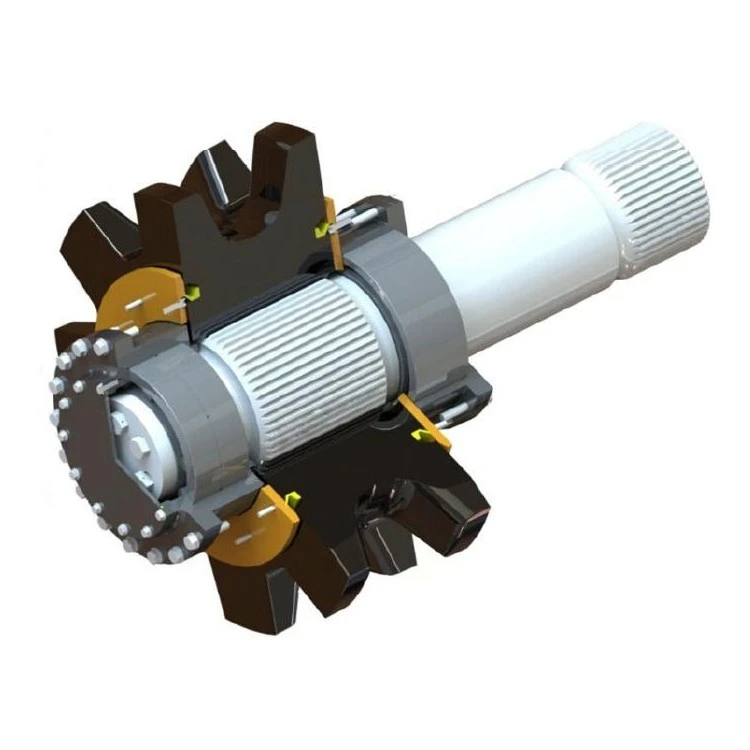
We offer a wide range of gears, including Drive Shaft Assembly for Electric Rope Shovel, Front Idler Shaft, and Drive Shaft, which are suitable for various robotic applications. Our gears are made from high - quality materials and are manufactured using advanced techniques to ensure high precision and reliability.
In addition to providing high - quality gears, we also offer technical support and advice to our customers. We can help with gear selection, design optimization, and troubleshooting, ensuring that our customers get the best possible performance from their robotic systems.
Conclusion
Gears are an essential component in robotics, playing a vital role in the operation and performance of robotic systems. They enable precise control of motion, power transmission, and the ability to perform complex tasks. As a gear supplier, we are committed to providing high - quality gears and excellent service to the robotics industry.
If you are involved in the development or manufacturing of robotic systems and are looking for high - quality gears, we would be delighted to discuss your requirements. Contact us to start a conversation about how our gears can enhance the performance of your robots.
References
- Norton, Robert L. "Machine Design: An Integrated Approach." Pearson, 2012.
- McCarthy, J. Michael. "Introduction to Theoretical Kinematics." MIT Press, 1990.
- Tsai, Lung - Wen. "Robot Analysis: The Mechanics of Serial and Parallel Manipulators." Wiley, 1999.